
Feel free to contribute your questions, thoughts, and concerns by leaving us a comment. We always welcome thoughtful discussion and we promise to get back to you as soon as possible.
We’d also love to hear about your adventures. Send us an email at and tell us all about your experiences. If you have a particularly interesting story we’ll share it on the blog for everyone to enjoy.
Want to know what it’s like to be on a BRANT tour? Check out our most recent trip reports from Texas, New Mexico, and Belize.
Texas – South Texas Tropicals
Belize & Guatemala – Jay’s Bird Barn
New Mexico – Winter in the Land of Enchantment

Let Doug Gochfeld take you on a vicarious trip to Cape May with this trip report from last month’s Cape may: Migration Magic tour!
Let Dave Krueper take you on a vicarious trip to Big Bend with our latest trip report from last month’s private trip to West Texas!
Spoiler alert there will be adorable Montezuma Quail!
The week had been beautiful. Unseasonably warm and with the exception of a few afternoon thunderstorms, relatively dry. I grew up on the south shore of Lake Erie and know well how fickle a month May can be, bouncing from days that feel more like November or December to afternoons that feel downright July-like. Just as the birds were, I was paying close attention to the weather. So when I awoke to a rainy Friday morning, I prepared myself to lead a field trip for which I was nearly certain most of the participants would not show.
Oh, how I love being wrong!
Ray Stewart and I had a van full of folks, all of our registered participants in fact, whose spirits had not been dampened by the wet morning. I worked to pump myself up, as much as the participants, by letting them in on a little secret; that birding in the rain was fun and is often even more productive than birding in fair weather.
I thought back to a particularly wet Big Day Van trip that I led at the previous Biggest Week in American Birding; a day that will live in my memory for a long time. I met new friends that day and saw a King Rail, which for me was a new bird. As a guide, rabid birder, and professional ornithologist, lifers don’t happen every day.
As Ray and I worked to keep our humors up, off we went to a magical land of Private Marshes.
When Rob and Lester sent me my leader schedule a few weeks before the festival was to begin, I was delighted to see that I was slated to lead a Private Marshes trip. This very special trip allows participants to enter an extremely prestigious piece of private land, the renowned Winous Point Shooting Club. While many individuals might at first not understand the connection between shooting birds for sport and bird and habitat conservation, when one dives deeper into the subject they may find volumes written on conservation dollars raised by hunters and sportspersons. Winous Point Shooting Club is the oldest shooting club still in operation in the United States, dating back to its founding in 1856. Throughout its history, Winous Point has been on the cutting edge of wetland research and conservation efforts. (For more info on the history of the club and its associated marsh conservancy, preview this epic volume here.)
As a private hunt club, access is extremely limited. One must be either a member (of which there are fewer than thirty), a guest of a member, a researcher, or one of the lucky few individuals that is granted access (usually as a member of a group) for educational purposes. When I was pursuing my undergraduate degree in Wildlife Management at The Ohio State University, I was fortunate to spend a weekend camping at Winous Point, exploring its marshes. I saw my first Bald Eagle there. To say I was eager to get back would have been a major understatement.
The intermittent rain coupled with the wind made birding difficult. It seemed each time we would all pile out of the van, a steady sprinkling would begin and birding from inside of the van was a near impossibility with the number of bodies inside. We were doing the best we could and enjoyed the birds we got to see, but activity was low and by mid-morning our enthusiasm was beginning to slip.
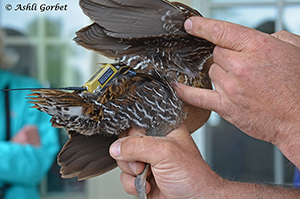
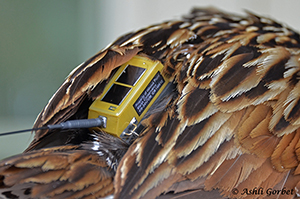
We were finishing loading up the van when a Utility Vehicle with two young men pulled up on the dike road behind us. Presuming they may be researchers, I went to chat them up. Sure enough, they were checking the rail traps. I had caught wind of the project through a conversation with another guide who had led the same trip just a few days before. Their lucky group had the chance to ogle a King Rail up close and personal. Knowing how rare King Rail is in Ohio, state listed as endangered, in fact, I figured we wouldn’t be that lucky, but hoped that perhaps the crew might catch a Virginia Rail or Sora that our group could see. Their plan was to take any bird they might catch back to the headquarters to put a transmitter on it, for tracking movement and locations, band it, and take measurements before returning it to the location where it was captured. They agreed to hold on to anything they caught for us to see, I agreed that we would be back at the headquarters around the time they were to return from checking the traps, and off they went.
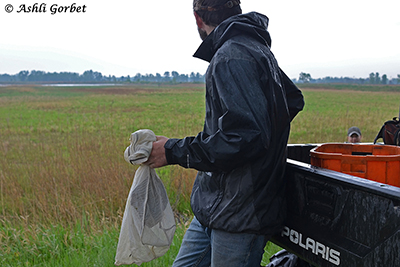
A short while later, I saw their UV ahead of us on the dike road. The two men were walking back from the marsh and I noticed the lead gentleman was carrying a bag. A big bag. I was like popcorn in the passenger seat of the van, completely giddy. I had a really, really good feeling about what was inside that bag. There was no tempering my excitement and I notified everyone in the van that they had caught a bird for us to see!
We pulled up behind them and scampered out of the van as they walked back up to the top of the dike. Yep. Sure enough. The King of all Rails was in the bag. My unbridled enthusiasm compelled me to snap a few pictures of the bird in the bag with the beautiful marsh from where the King Rail came in the background. The photo captures the dreariness of the day, but at that moment, a sun was shining in my heart and I was on could nine in my head.
Another bander friend of mine once said “Seeing a new bird in-the-hand is like getting a lifer all over again.”
We spent the next short while birding the remainder of the marsh but all I could think of was the King Rail that would be awaiting our return. We picked up a few new species for the day and headed back to talk with the researchers and John Simpson, the Director of the Winous Point Marsh Conservancy, which oversees the management of the land. John was kind enough to not only show the bird to us and discuss their rail research project, but he also later took us into the main lodge and discussed the history of Winous Point Shooting Club and its associated Marsh Conservancy. We poured over the maps and probably would have happily asked him questions for another several hours, but as the weather started to break, our anything but bleak day was drawing to a close.
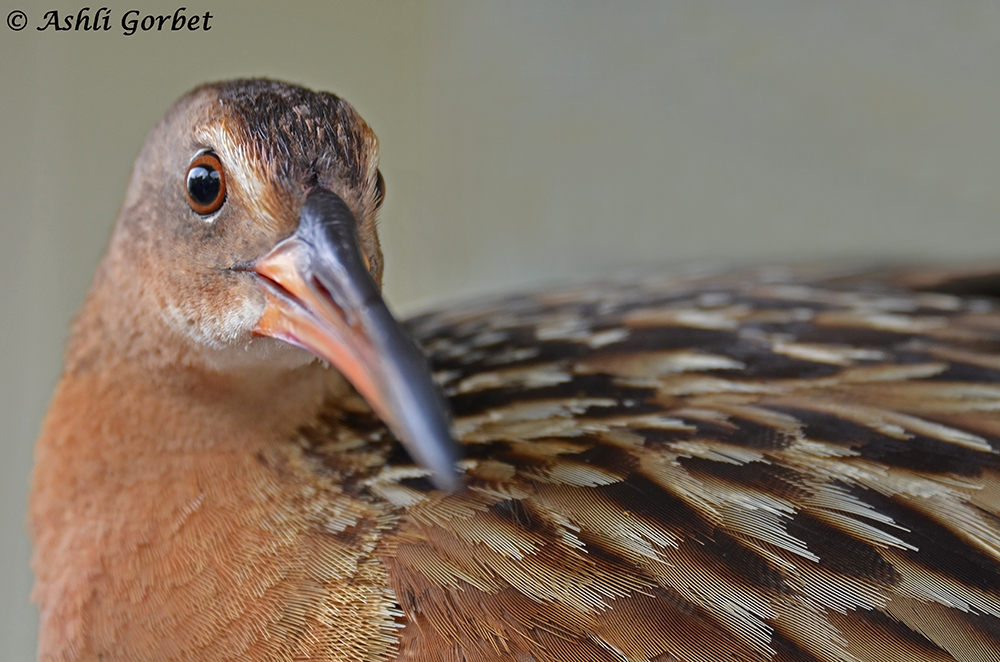
While our species day list was kept below average due to the weather conditions, being lucky enough to view a King Rail, in-the-hand was something that certainly does not happen on just any birding trip. In fact, I believe this is only the fourth King Rail transmittered since the project began. Combine this with the opportunity to spend time at an exclusive hunting and conservancy property, having the chance to speak with its director about the history and research goals of the organization, and being granted the permission to walk through the lodge and inspect the museum-quality artifacts, decoys, letters, photographs, etc., made this the absolute highlight to a week punctuated by one intensely positive experience after another.
I can’t say enough about The Biggest Week in American Birding. Visiting private parcels of land such as this, observing research in the works, and aiding conservation efforts with special fundraising events and programs (check out The Biggest Week webpage for more information) truly makes this festival one of the premier annual birding events in the US. The camaraderie and community associated with this festival is second to none. There is nowhere in the world I would rather be during the first two weeks of May! While the warblers draw folks to the area, sometimes royalty steals the show.
And for me, it’s a chance to come home.
On that day, I was given a particularly special gift. I was able to revisit a place I spent time during a formative period in my career, when I was just starting to get my feet firmly planted as a wildlife biologist. Though my time there was incredibly brief, it was impactful. I was raised on the shore of the lake that feeds these wetlands, romped across the beaches and islands of the region as a young girl, and developed my interest in the natural world in this area. The Great Black Swamp served as my natal birding grounds, with this piece of property helping to pique the interest in birds and bird research which has morphed into my passion and my vocation. To return all these years later as an accomplished researcher, bird bander, wildlife biologist, and bird guide, was humbling and exciting and profoundly soul stirring.
 Not soon to be forgotten.
To see a couple of cool maps associated with the transmitter locations of the marked King Rails, including the bird that was marked the day our group visited Winous Point, check out the Winous Point Facebook page here.
I was lucky enough to be substitute guide for a trip to the Texas Hill Country this spring. The trip was put together by our friends at Naturalist Journey’s. There was a last minute emergency with their regular guide and they needed someone quick! I was very, very glad to have answered the call and was rewarded with an incredible trip and great clients!
(Bats at the Frio Bat Cave!)
Greetings all,
I’m fresh off the plane from a private tour in Belize and wanted to share some of my favorite photos and memories from the trip. Check out the photos and stories below and be sure to leave us your thoughts!
Upon arrival in Belize City we gathered our things, enjoyed some coffee, and took a quick flight in a jumper plane to Caye Caulker, our beach-side escape for the next 3 days. Caye Caulker is a very small island situated 15 minutes off the coast in the Caribbean Sea. Caye Caulker has everything one could want for a beachy birding getaway, including snorkeling, walking trails through native littoral forests, great food, a laid-back easy-going atmosphere and conch toting Rastas – it is a fishing community after all.
A look at our 15 passenger jumper plane. Yikes! Quite the ride.

Oh right, and here was our runway. Not to worry, if you overshoot the runway, the warm Caribbean water is sure to slow the plane to a stop.

The Airport
Baggage Claim (just left of the Caye Caulker sign)

Our wonderful Seaside Cabanas overlooking the Caribbean. In the mornings the citrus colored sun would peak over the water and trickle through the wooden window shutters. Outside, the magnificent Magnificent Frigatebirds were already playing in the warm tropical breeze.
Did we mention that we had THREE young birders on the trip!
Here’s the third! Ana “Banana”
What a wonderful experience it was to explore the tropics alongside three brilliant youngsters.
We spent two mornings snorkeling on the barrier reef with sea turtles, 12 foot sharks, eels, fish, you name it (under-water photos to come). The birds were great too! Above is an Osprey! Look awfully pale to you? The Caribbean subspecies is very pale, and lacks the dark facial markings of our mainland birds.
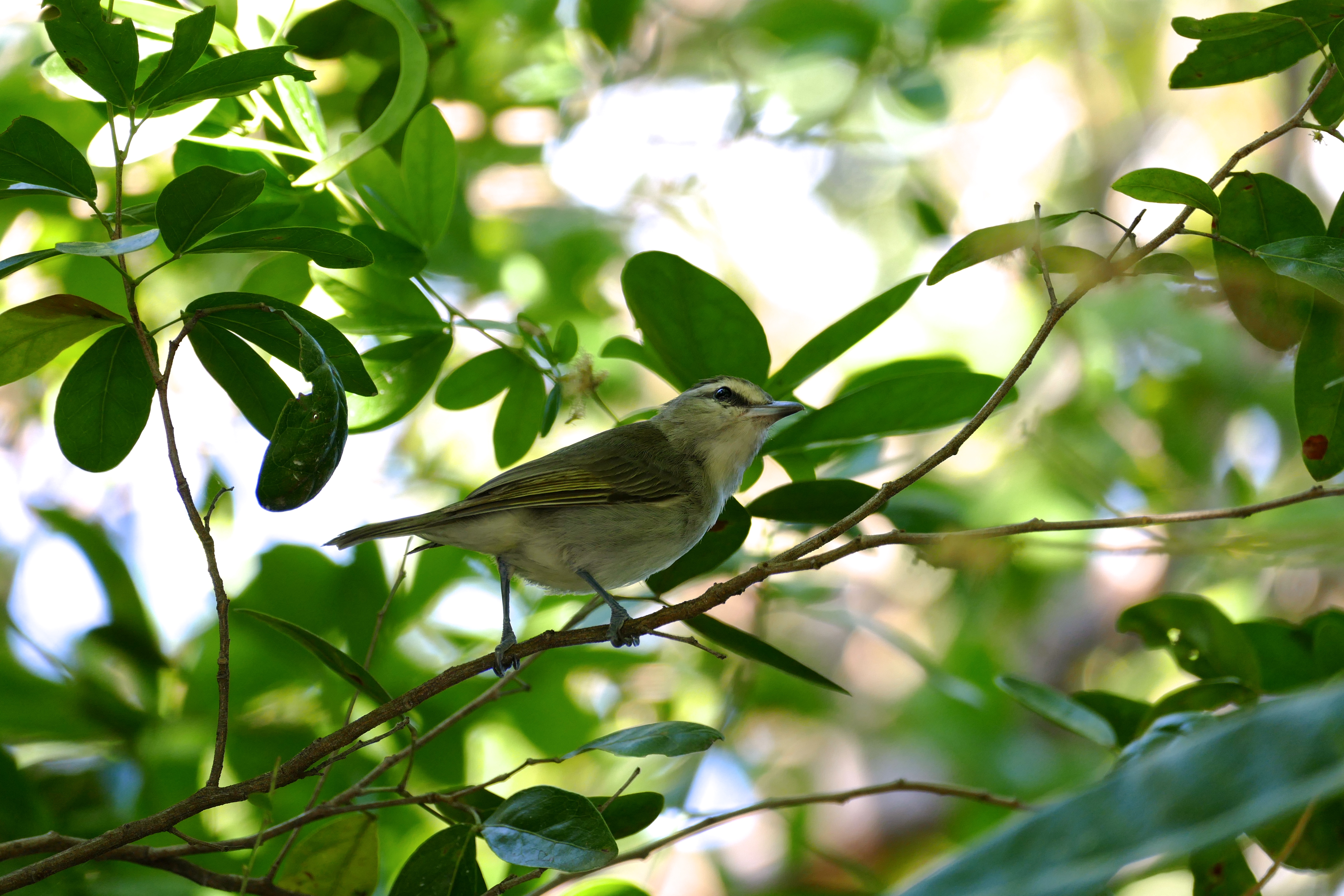
We were fortunate to be on the island during the Great Backyard Bird Count (GBBC) and thus were able to contribute bird sightings from a very under-explored region of the western hemisphere. This Yucatan Vireo (above) was one of many seen during our stay. We were also the only people to contribute records of Rufous-necked Wood-Rail to the GBBC this year – seems only right for a New Mexican birder to take on that job.
Once back on the mainland we visited the Belize Zoo, a facility that exhibits only native species and is a really important wildlife education facility for the country. Aside from education the zoo curator is a conservation activist and was largely responsible for conserving an important Scarlet Macaw breeding ground in Belize (one of only a few left). This Olive-throated Parakeet was seen in the trees just outside the zoo entrance. After the zoo we finished our drive to western Belize to stay along the banks of the Macal River at the wonderful duPlooy’s Jungle Lodge.

Upon arrival we were greeted by mama and baby Kinkajou! Soooo cute, just don’t get in between them and a banana.
The Collared Aracaris were part of the welcoming party!
They were a little shy at first…
But quickly adjusted.

One day we made the long, winding drive to Black Rock Lodge, slightly higher in elevation than duPlooy’s, and home to the endangered Orange-breasted Falcon. The Peregrine Fund has been partnering with Black Rock to reintroduce these majestic birds to their native haunts along the limestone escarpments in the thick Belizean jungles.

We didn’t just see local birds. We also saw some familiar faces. Here a Black-throated Green-Warbler is staging for his long journey to the Boreal Forest of upper North America.

An Olive-backed Euphonia makes his presence known.

We spent a great morning at Xunantunich Mayan Archaeological Site, near San Jose, Belize. Here our clients are approaching the ancient city, Xunantunich, for the first time!
The core of the city occupies about one square mile (2.6 km²), consisting of a series of six plazas surrounded by more than 26 temples and palaces. As a polity in whole, Xunantunich contains 140 mounds per square km. One of Xunantunich’s better known structures is the pyramid known as “El Castillo”, the dwelling where the city’s upper-class probably lived.
CHAAHK, The Rain God
Chaahk is the name of the Maya rain deity. With his lightning axe, he strikes the clouds and produces thunder and rain.
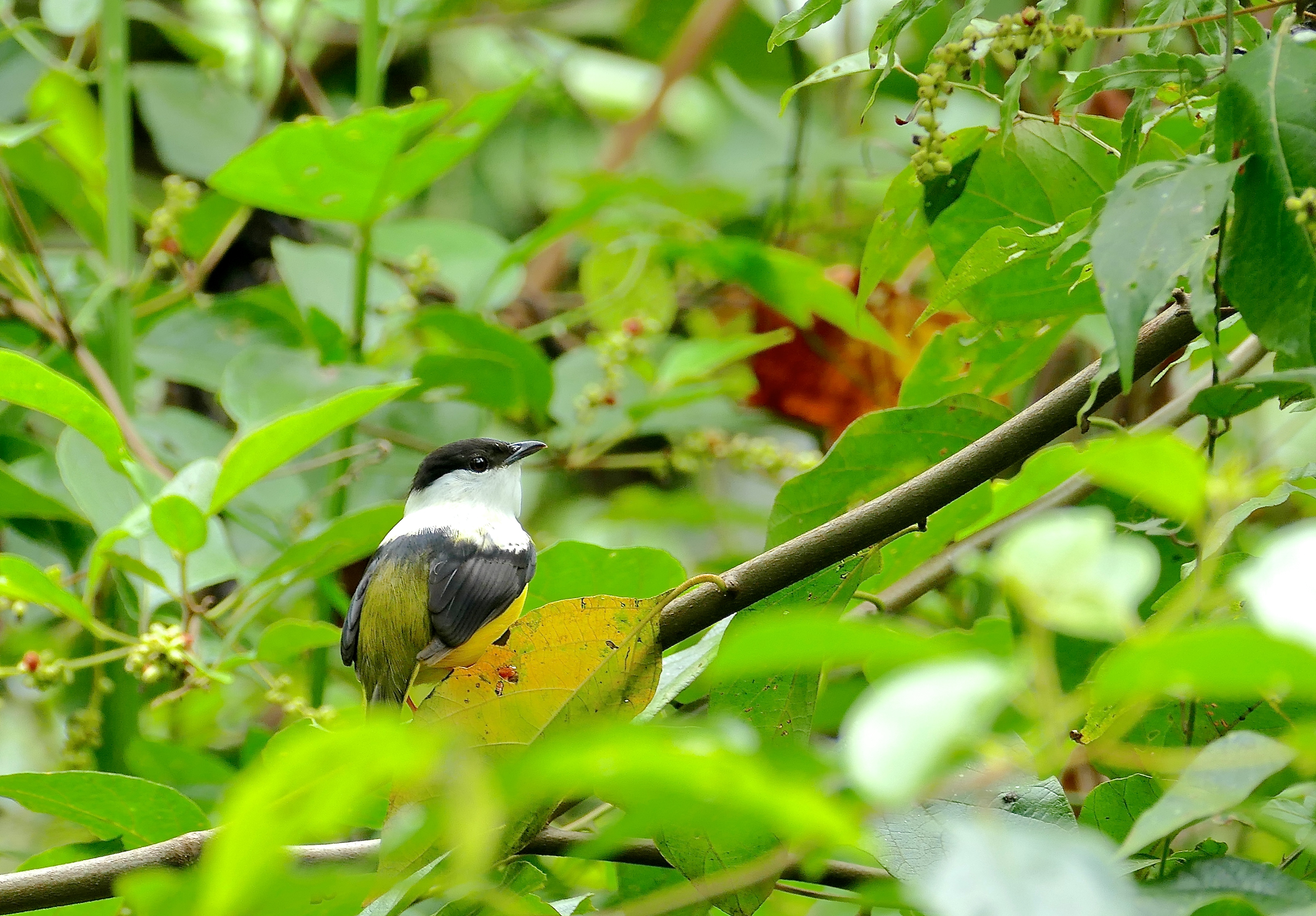
Here a White-collared Manakin shows off his dance moves for the females.
We have lots of other photos and stories to tell – from our spelunking adventures into the Mayan underworld to grand adventures in Guatemala – and we will get them posted just as soon as we can. For now, we hope you enjoyed the first of many posts about the wonderful country of Belize! We’ll see you there next year for another great adventure.
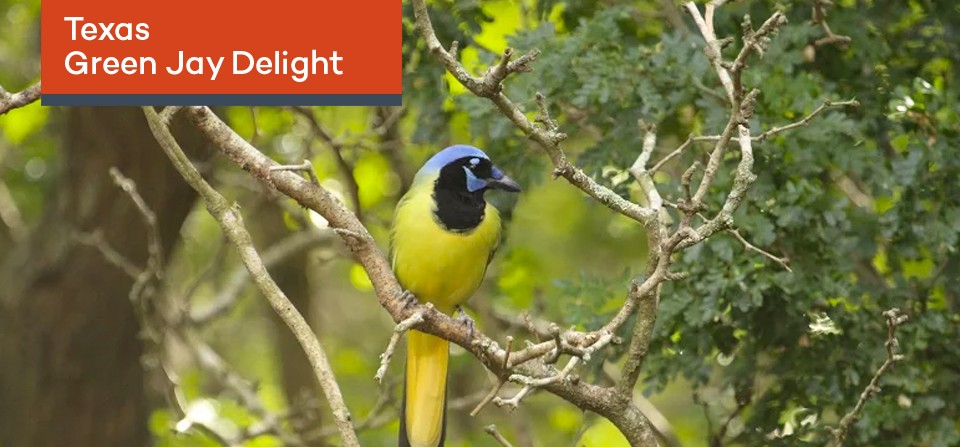
Just back from our South Texas tour! Check out our trip report form this years trip. We had a great time and some great birding including Gray-crowned Yellowthroat, Tropical Parula, White-collared Seedeater and more!
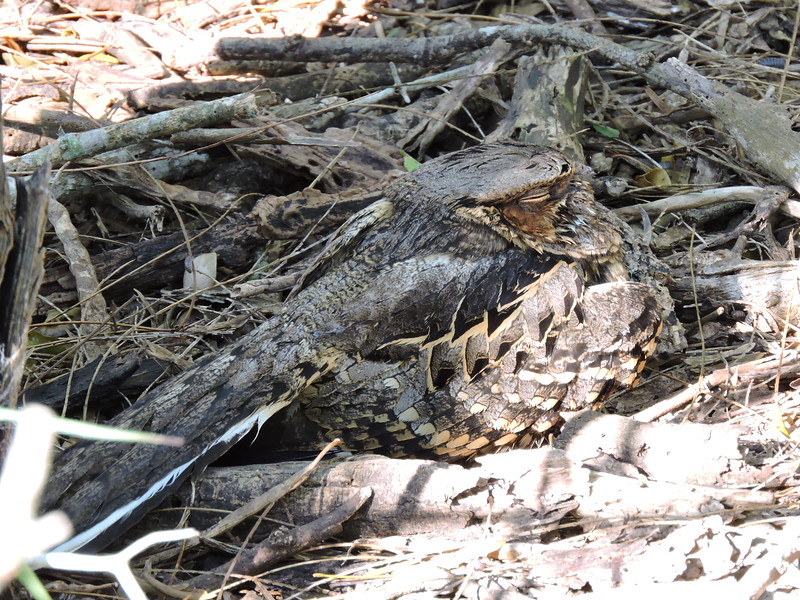
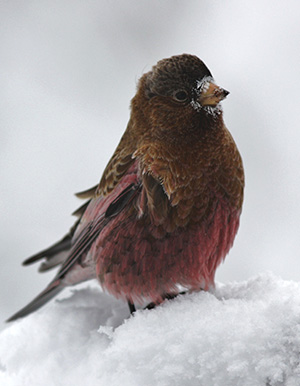
Leaders: Doug Gochfeld, Jason Kitting, Dave Krueper, Raymond VanBuskirk
Travel day for everyone. Bad weather in Chicago delayed many flights, but the group did make it to Albuquerque just before sunset. An earlier flight with several participants allowed for some afternoon birding in Embudito Canyon on the west flank of the Sandia Mountains. We all gathered at the Na- tivo Lodge for a meet and greet ses- sion and to go over our schedule for the next several days. Dinner was at a local eatery, The Range, and then the group celebrated Ethan’s 13th birth- day with a surprise birthday cake with a Black Rosy-Finch design to give us a grand start to the tour.
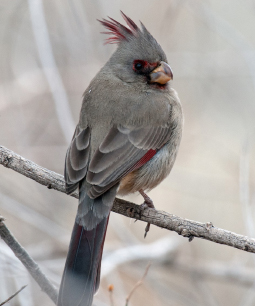
Beautiful Male Pyrrhuloxia
Up early, we arranged to store some of our luggage at the Nativo to save space in the vans and then off for breakfast at the El Camino Restaurant for some traditional New Mexico cuisine before the long drive to Roswell. This was a departure from the original itinerary to give us the opportunity to search for the first state record of Common Crane which had recently been discovered. We drove through short grass prairie in a freezing rain which made for some tricky driving conditions, but we did well. Several stops to the north of Roswell resulted in looks at distant Ferruginous Hawks and a fly-over McCown’s Longspur. We spent the remainder of the late morning and early afternoon search- ing the agricultural fields to the south- east of Roswell for the single Common Crane in the midst of thousands of Lesser Sandhill Cranes, but we were not able to locate the bird. Late lunch in Roswell, and then a several hour drive from Roswell to Socorro in the Middle Rio Grande Valley, passing through Lincoln (home of Smokey Bear and the origin of the Lincoln County Wars made famous by Billy the Kid) and to the north of the Trinity Site (where the first atomic bomb was detonated in 1945). A Golden Eagle was a good find along the way and we were able to watch as it circled over the highway before departing to the south. Dinner at Socorro Springs Brewery in town was fun.
Today was another early start with a quick breakfast at the hotel and then south to Bosque del Apache National Wildlife Refuge (BdANWR) to view the flyout of the cranes and white geese. We arrived just in time to view the large flocks and then watch as they departed to feed in agricultural fields to the north of the refuge. We toured the refuge for several hours and then had a picnic lunch at the headquarters before driving south to Paseo del Rio Camp- ground and Rock Canyon Marina at Elephant Butte State Park for afternoon birding in a desert environment. Some of the highlights for the day included Cackling Goose, Pyrrhuloxia, Sagebrush and Black-throated sparrows and Sage Thrasher. Driving back to the north, we stopped for dinner at Frank & Lupe’s for New Mexican fare, and then back to Albuquerque where we were reunited with stored luggage at the Nativo and prepared for some higher elevation birding and colder weather in the Sandia Mountains.
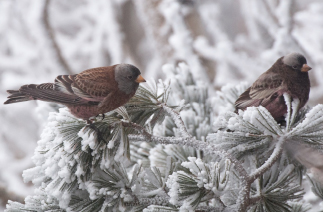
Gray-crowned Black Rosy-Finches
After breakfast at the hotel, we departed and drove east and then north to Sandia Park to search for Pinyon Jays and Evening Grosbeaks in the juniper habitats east of the mountains. We enjoyed good views of Cassin’s Finches and a huge flock of over 250 Evening Grosbeaks there and then drove the 10 miles up into the Sandia Mountains to the Crest House. Here we were able to watch as three species of rosy-finches came in to the feeders and also witnessed the banding operation that BRANT has been conducting on these unique birds for ten years. After good views of the finches, a hot lunch and lots of photos, we headed back into town for dinner at The Range and then to pack up gear and prepare for our last morning of birding before departure at the airport.
After breakfast we headed to Embudito Canyon to view some of the last of the target species in the mixed shrublands and canyons on the west side of the Sandia Mountains. We all were able to get great looks at Bewick’s Wrens, Western Scrub-Jays, Rufous-crowned Sparrow, Canyon Towhee, Cactus Wren and Curve-billed Thrashers. With airline departures on our mind, we departed the canyon just past 10:00 with a surprise quick view of two fly-by Scaled Quail and a last second flyover Prairie Falcon, a lifer for some. With that nice send- off, we headed to the airport and made departures back to Illinois to end a long weekend in New Mexico.
This post was originally published on the Urban Birding Challenge webpage. BRANT guides and owners have been instrumental in creating the Urban Birding Challenge (UBC) over the past few months. Going forward, you will see UBC content from BRANT guides posted on the BRANT blog fairly regularly.
The UBC is a global birding competition and outreach projected aimed at getting people across the planet out birding in their own backyards! Please take a minute to go to the UBC site and see how you can get involved! Click here to see the original publication of this post on the UBC page.
The birding community of NYC kicked off the new year of 2015, and the inaugural year of the UBC, already sitting on two remarkably rare (for this region) Kingbirds that had been hanging around since late fall. The story started on November 15, 2014, when someone birding Floyd Bennett Field, in Brooklyn, came across a kingbird with a yellow belly. The only kingbird that is regular at any time of year in the region is Eastern Kingbird, which is a common summer resident and breeder in the area. That species is mostly gone from the northeast by the time October rolls around, and virtually unheard of in the region in November, by which time the species is on its wintering grounds in South America. Western Kingbirds have yellow bellies, and are rare-but-regular migrants along the east coast, and a couple are usually seen on Long Island each fall, as late as December. Western Kingbird would have been the overwhelming odds-on favorite in this situation, but the observer noticed that it didn’t quite fit that species, and identified it as a CASSIN’S KINGBIRD. Cassin’s Kingbird is extremely rare in the northeast, and had been reported just once previously in the state of New York. Word didn’t get out to the birding community until that evening, when the observer got to a computer and sent out some E-Mails to confirm their suspicion, before entering it into eBird.
Here is the eBird distribution of Cassin’s Kingbird, showing just how unusual it is in the eastern United States. The bottom of the three pink squares in the northeast includes the Brooklyn bird.
The next day, despite extremely thorough searching by a couple of dozen birders, it was not re-found. Tears were shed, and spirits were shattered, as most lost the hope, which had so briefly been kindled, of ever seeing the species in New York State, let alone New York City. However, a week later, a report of a Western Kingbird from the Community Garden at Floyd Bennett Field sent birders scrambling, and within minutes those first responders were staring at was undoubtedly the same Cassin’s Kingbird that had been MIA for a week. All the birders rejoiced.
This rejoicing was justified, as this was probably going to be the regionally rarest bird seen in New York during this fall/winter season, and had a really good chance of being the rarest bird of the entire fall for the northeastern US. Nobody could have foretold what was to come next though.

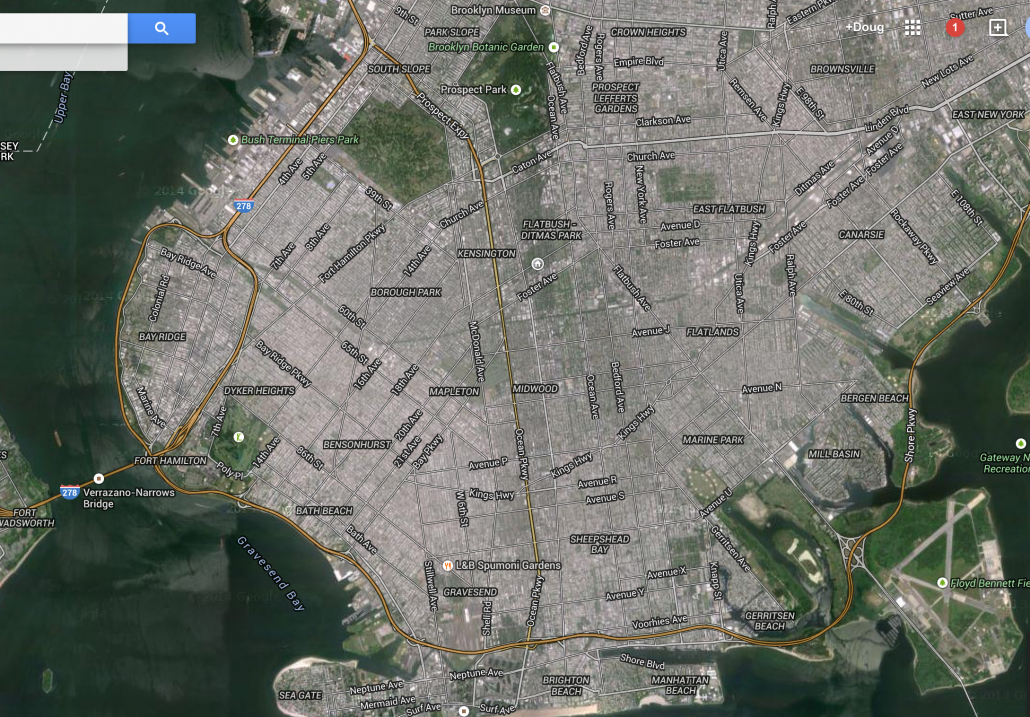
Floyd Bennett Field is the green patch of land at the SE (bottom right) corner of the map.
A side-note here: Floyd Bennett Field was the first municipal airfield in New York City, and while it didn’t catch on big-time for commercial air traffic (very luckily, in retrospect), it hosted many of the biggest names in early-mid 20th century aviation, including Amelia Earhardt, and Howard Hughes (Hughes took off and landed at Floyd Bennett on his 1938 record-breaking around-the-world flight). After being in Navy possession through much of World War II, most of the airfield was transferred to the National Park Service in 1970. There were a lot of things that could have happened over the last 70 years to make this bit of filled land not be a viable birding location, but luckily for the birding community, and for the suite of open-land bird species that utilize the habitat every year, history has seen to it that this 2 square mile piece of land is one of the largest accessible green spaces in New York City (much larger, even, than Central Park).
Many enjoyed the Cassin’s Kingbird through the holiday season, but the biggest gift to local birders would wait, appropriately, until Christmas. On Christmas night, a photo was posted to the New York Birders Facebook group of another yellow-bellied kingbird in New York City. This one was found by a casual birder who was taking photos outside of his apartment in Manhattan’s West Village neighborhood. When Zack Winestine contacted Gabriel Willow of NYC Audubon, who he had met on a bird walk once upon a time, about a bird he had seen which was possibly, again, a Western Kingbird, he couldn’t have imagined the crowds of birders that would descend on his neighborhood over the following weeks as a result of Gabriel’s sound advice: “Get a photo!” When he followed that advice, and sent the photo along, Gabriel realized that it was something much rarer than a Western Kingbird; it was clearly either a Tropical Kingbird or a Couch’s Kingbird.
The labyrinthine West Village is purely urban, with a population density greater than the densest large cities in the world (~34,000 people jammed into ~0.4 square miles). Well known for the number of celebrities that live there, it is certainly not known as a haven for wildlife. I’ve certainly never brought binoculars there. In fact, despite the fact that even birders look at me crazy when I mention many tiny and obscure places that I think would be good to bird, I can’t say that even I had contemplated birding in the West Village (It’s got some good bars though).
All that said, there I was the next morning with about 10 other birders scouring the area for the as-yet-unidentified Kingbird. Tropical and Couch’s Kingbirds are physically extremely similar, and almost impossible to separate with 100% confidence from visual field observation alone, but their vocalizations are completely diagnostic (so hearing it is key). They are both extremely rare in the northeast, with Couch’s sporting just two records in the region, and Tropical having in the 8-12 range, before the Manhattan bird came to light. Either one would have represented the first record for New York State of their species, though Tropical had been on many people’s radar as a potential addition to the state list for some time.

If you thought Cassin’s Kingbird was rare in the east, get a load of this eBird distribution map of Couch’s Kingbird!
The Kingbird was re-found a few blocks from the location where Zack had initially found it, and the dozen of us who had been spread out over the neighborhood coalesced at the bird under an apartment building at a normally busy 5-way intersection across the street from a children’s playground. The Kingbird was alternately sunning itself on the trees and fire escapes and demolishing flies that were sunning themselves on the sunlit bricks of the building. Within 5 minutes it provided one of the more surreal experiences of my birding life, when it erupted into a chorus of “pip-pip-pip” calls, leaving all of us almost dumbfounded that we were watching a virtually unprecedented and completely unexpected COUCH’S KINGBIRD, with city busses and taxis as a backdrop. Word quickly got out that the kingbird was still there, and was indeed the rarer of the two possibilities, and the various New York birding listservs went into overdrive. With sometimes up-to-the minute updates on the location of the Couch’s being posted in multiple venues online, just about everybody who chased the Couch’s Kingbird got to see it. As a side-note, even Tyrion Lannister’s alter ego, Peter Dinklage, got to add the Couch’s Kingbird to his life list (even though he probably doesn’t even know he has a bird life list…yet) early that first morning—see, I wasn’t lying, there are famous people in New York!
For me, it joined an impressive list of extreme rarities that I’ve seen in New York while using just public transportation. I figured that while I was at it, I should finally add the long-staying Cassin’s Kingbird to that list as well, and why not in the same day! Just an hour and half later, I was in southern Brooklyn watching the Cassin’s Kingbird hawk insects from the low posts of the FBF community garden, its decidedly different, but still very human-altered, habitat. NYC Birding: just take the B to W4th, pause for some fun, then take the 3 to the 5 to the Q35- now THAT’s some urban birding!

This post was originally published on the Urban Birding Challenge webpage. BRANT guides and owners have been instrumental in creating the Urban Birding Challenge (UBC) over the past few months. Going forward, you will see UBC content from BRANT guides posted on the BRANT blog fairly regularly.
The UBC is a global birding competition and outreach projected aimed at getting people across the planet out birding in their own backyards! Please take a minute to go to the UBC site and see how you can get involved! Click here to see the original publication of this post on the UBC page.
New York City is known far and wide for a lot of things, none of which I need to re-hash here, because, well, the internet.
However, severely neglected amidst all of the hubbub about this glorious city that I call home, are the elements of the natural world that thrive in spite of, and sometimes even because of, the dramatically urban environment.

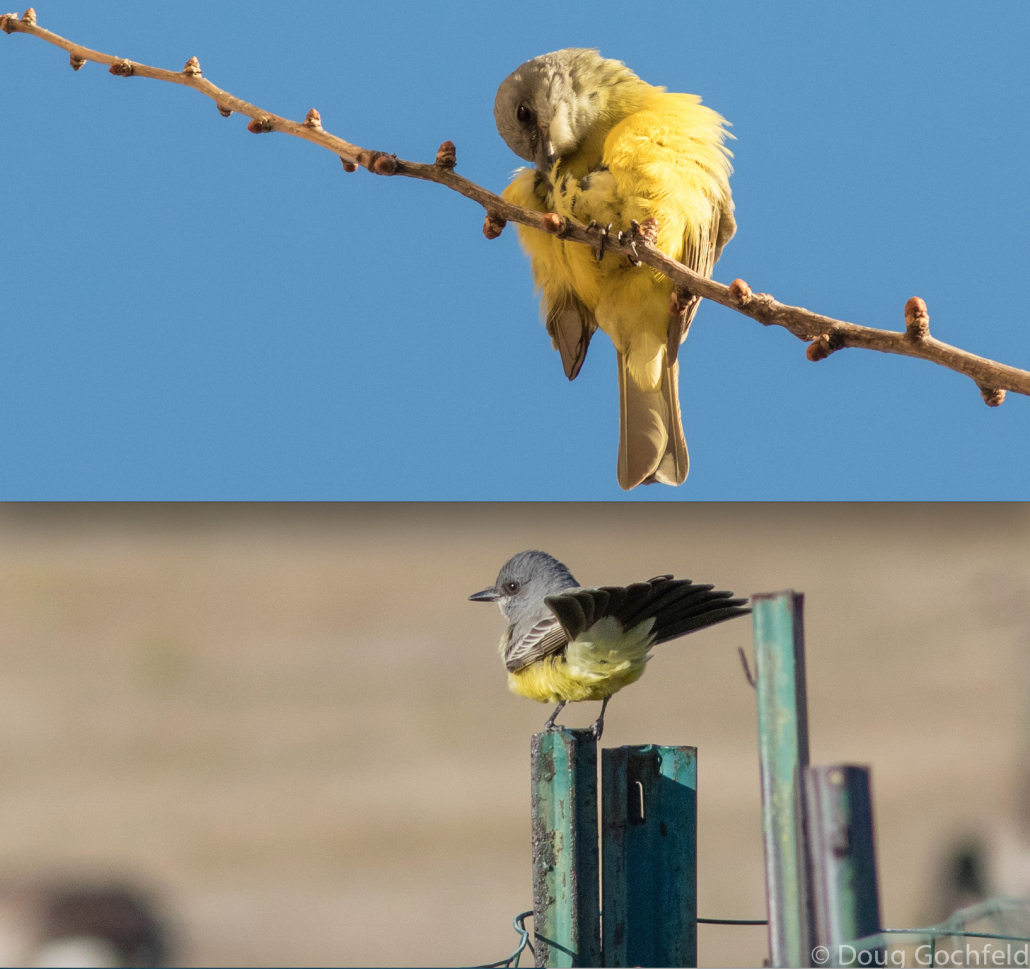
Yes, there is actually a Couch’s Kingbird somewhere in this photo.
Birding on New Years Day in the northeast usually involves scouring beaches for rare gulls, checking feeders for winter finches, getting a leg up on your year list by chasing rare waterfowl, and maybe some staring off shore into the teeth of a frigid wind frustratingly trying to pick out alcids and other northern waterbirds hiding in the waves. Whatever the type of birding you’re used to doing in early January in this part of the world, it probably hasn’t involved looking at a bright lemon yellow flycatcher that should be hawking insects in Mexico…let alone two of them. That is, until this year.
This New Years Day, I found myself in Manhattan’s West Village neighborhood, with birding gear in hand: definitely not a scenario I could have imagined, until about a week prior.
I was kicking off my personal contribution to the Urban Birding Challenge by being part of the gaggle of people chasing the COUCH’S KINGBIRD around the labyrinthine building-formed canyons of the West Village with no waterfowl, beaches, or bird feeders in sight, and with an aural background more heavily composed of taxicab and bus engines than the screams of gulls.

The Couch’s Kingbird alternated between grabbing unsuspecting flies off the sides of buildings, and reverting to what the species does a ton of on the wintering grounds: eating berries and other fruit.
The Couch’s Kingbird was half of the double-MEGA (technical birding term, kind of) Kingbird smackdown that NYC experienced this holiday season; the other half being the Cassin’s Kingbird whose occurrence in south Brooklyn also spanned the New Year. The Couch’s Kingbird in Manhattan was the first record of the species for New York State, and just the 3rd for eastern North America, while the Brooklyn Cassin’s Kingbird was the 2nd record of that species in New York State, and only the 7th or so in Northeastern North America.
Because the accounts of the absurd findings of the two Mega-rare Kingbirds were remarkable stories on their own (but were SO last year), you can read more about doubling your Kingbird here.
It’s cold out here in these streets. Even the Kingbird’s new Pigeon friends looked chilly most of the time!
I ended up visiting the neighborhood to see the Couch’s Kingbird several times, and it became one of my favorite (perhaps my absolute favorite) rare bird settings that I’ve ever experienced. This was in large part because of the mass of non-birding humanity that was inextricably part of one’s experience when chasing the bird. This afforded many birders and I the opportunity to engage throngs of non-birders in conversation about this wayward 1.5 ounce songbird. From people who were learning for the first time that birding was a thing, to those who were interested in nature but assumed they had to leave the city to get theirs, it was a very satisfying experience to be able to broaden so many people’s horizons. Giving passerbys more awareness, even if just slightly, of the natural world around them was a very fulfilling win win for everyone involved. Birders scouring the area for the Kingbird recorded >25 species in the neighborhood over the couple of weeks of now-regular (thanks to the presence of such a rarity) birding coverage. That may not seem like much to birders from some settings (of course, it also can sound like a mind-bogglingly HIGH number to non-birders), but to fully appreciate this, one should consider the situation. The West Village is completely urban, with just a handful of postage-stamp sized “parks,” that in the winter sport very little in the way of plants with any foliage on them. It’s an area with 34,000 residents jammed into 0.4 square miles (which works out to be a higher population density than all but 4 cities in the world, for perspective), yet there were dozens of American Robins and White-throated Sparrows, with other species like Dark-eyed Junco, Yellow-bellied Sapsucker, Hermit Thrush, Northern Cardinal, White-breasted Nuthatch, Song Sparrow, and Blue Jay making a decent mid-winter living throughout all of the Kingbirds’ haunts.

I bet that this guy wouldn’t have been so absorbed in his phone had he known that he was walking mere feet away from an animal called a Yellow-bellied Sapsucker!
It’s not completely clear whether the city is truly an oasis for birds looking for a respite from the cold and looking to take advantage of the copious (from a bird’s perspective) food scraps that are so prevalent, or whether it’s a trap that migrants have difficulty migrating out of once they get there in the late fall. Either way, the phenomenon of a higher than normal diversity of songbirds trying to tough out the colder months of the year in very urban parts of cities is real. In the late fall in New York, as it starts to get cold, birders have more success finding species that should be much farther south (often a continent away) in small parks surrounded tightly by urbanity than in the large green spaces like Central Park and Prospect Park, which are much more well-known birding locations which see some 200+ species of bird each year.
Winter birding in cities in temperate climates captures, in many ways, the essence of urban birding. Is it a simple function of the number of eyes looking, or the ease of covering the majority of decent habitat? Are the micro-climates generated by cities providing a viable wintering option for half-hardy species? These are some of the questions we hope the UBC will help to answer. Are you in?

Recent Comments